


Electric vehicles explained
Learn how electric vehicles work, charge, drive and fit into everyday life
New to electric
vehicles?
If you are curious about EVs, uncoverEVs.com helps you get a better sense of how they work and what it is like to own one, with tools and simple explanations on every page.
Simple
explanations
Clear, easy-to-follow answers to the most common EV questions.
Useful
tools
Use our tools to explore costs, range, charging and more.
All the basics at a glance
An electric vehicle uses a battery instead of a gasoline tank, and an electric motor instead of an engine. Drivers can charge at home, at work, around town or on longer trips. Modern EVs can travel hundreds of miles on a charge, require less routine maintenance, can cost less to fuel and are often more practical.
-
Standardized plugs
Nearly every new EV sold in America now uses the same plug, and an adapter covers the rest.
-
Many ways to charge
You can plug in at home overnight or at over 81,000 public charging locations nationwide.¹
-
Around 30 minutes
That is how long a typical fast-charging stop takes to add 100 to 200 or more miles of range.²
-
Plug and charge
Many charging networks allow you to simply plug in and automatically pay via your set up payment system.
-
More cargo and interior space
Because EVs don't have an engine up front, many offer an additional front trunk for extra storage. EVs also don't need a transmission tunnel running through the middle of the vehicle to connect the front and back wheels, which eliminates the floor hump usually found in the front console and rear middle seat area.
-
Spend less time and money on routine maintenance
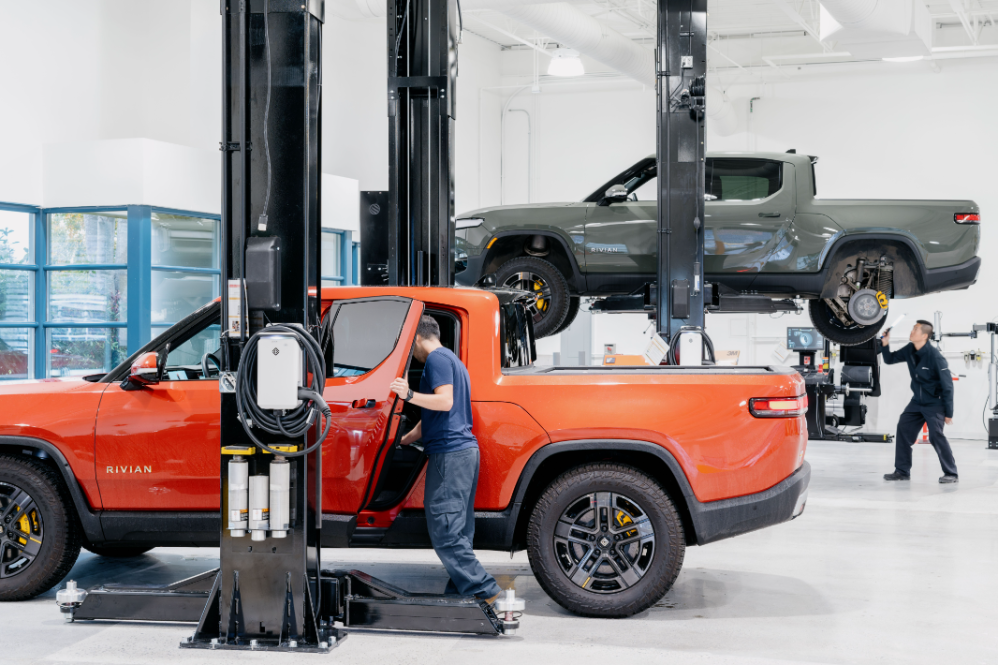
Electric motors have far fewer moving parts than gas-powered engines, which means far less that can wear out. EVs skip oil changes, spark plug replacements and timing belt service entirely, and regenerative braking means brake pads typically last longer too.
See how EV maintenance works -
Pay for electricity instead of gasoline
EVs are typically much cheaper to run than gas-powered cars. Costs vary by location and whether you use home or public charging, but many drivers cut their fuel costs by 50% or more compared to what they would spend on gasoline.⁸
Calculate your charging vs. fuel costs


-
Fuel where you park
Explore chargers near youHome charging can be highly convenient for drivers with access to a driveway or dedicated parking. It’s like having a cheap gas station at home. Many states, utilities and local programs also offer generous incentives that can help with charger installation.
But home charging is not a must. Many EV owners without it use workplace charging and public chargers near everyday destinations like supermarkets. There are also over 75,000 fast-charging ports around cities and in rural areas,¹ which add 100 to 200 or more miles in about the time it takes to grab a coffee.²
-
Take long trips with confidence
Today's EVs offer enough range for commuting and errands. And for longer trips, the nationwide availability of fast chargers—plus the fact that many new EVs come with navigation systems that automatically plan charging stops—makes long drives convenient and straightforward.
Understand EV range and charging -
Can I afford an EV?
EVs can cost more upfront than a comparable gas-powered vehicle, though leasing prices vary widely. But lower electricity costs and less maintenance typically make up that difference within 2-4 years of ownership.⁹ That's why, over time, owning an EV is generally considered significantly cheaper than owning a traditional vehicle.


What changes when you drive today’s EVs?
Charging is simpler than it sounds
There are three common ways to charge, and drivers often use a mix depending on where they live and how they travel.
DC fast charging
The gas-station equivalent of charging, with over 75,000 charging ports nationwide.¹ Built for faster charging and ideal for road trips. Modern EVs can add a large amount of range in roughly 20 minutes.²
Level 2
Common at homes, apartment buildings, workplaces and everyday destinations like supermarkets. Adds substantial range over several hours or overnight.
Level 1
A regular household outlet. Slow, but surprisingly useful to add a few miles of range to the battery, often overnight, and common among EV owners with modest daily mileage.
What if you cannot charge at home?
Plenty of drivers rely partly or entirely on public charging. Before choosing an EV, it can help to see what is already available around your home, workplace and regular destinations like your go-to mall or supermarkets.
Find EV chargers near any locationHow can I install a home charger?
Depending on where you live, federal, state, local or utility programs may help offset the cost of purchasing or installing charging equipment.
Why are more vehicles going electric?
Consumers are increasingly going electric as EVs have advanced rapidly over the last few years. Many automakers are responding by offering more electric models across nearly every vehicle type, from compact cars to trucks and SUVs.
At the same time, communities across America are feeling the positive impact of EV manufacturing, from new jobs to stronger local economies, less road noise and cleaner air.
Dive into the sections below to explore all aspects of EVs in more detail.



- U.S. Department of Energy (DOE): Alternative Fueling Station Counts by State
- U.S. Department of Energy (DOE): Electric Vehicle Charging Stations
- U.S. Department of Energy (DOE): FOTW #1375, December 30, 2024: Median EV Range in Model Year 2024 Reached a Record High of 283 Miles per Charge
- U.S. Department of Energy (DOE): FOTW #1323, January 1, 2024: Top Range for Model Year 2023 EVs was 516 Miles on a Single Charge
- Federal Highway Administration (FHWA): Our Nation’s Highways 2026: Drivers
- U.S. Department of Energy (DOE): FOTW #1360, September 16, 2024: A Typical EV is 87%–91% Efficient Compared to 30% for a Conventional Gasoline Vehicle
- U.S. Department of Energy (DOE): Maintenance and Safety of Electric Vehicles
- U.S. Department of Energy (DOE): FOTW #1186, May 17, 2021: The National Average Cost of Fuel for an Electric Vehicle is about 60% Less than for a Gasoline Vehicle
- Consumer Reports: Electric Vehicle Ownership Costs